
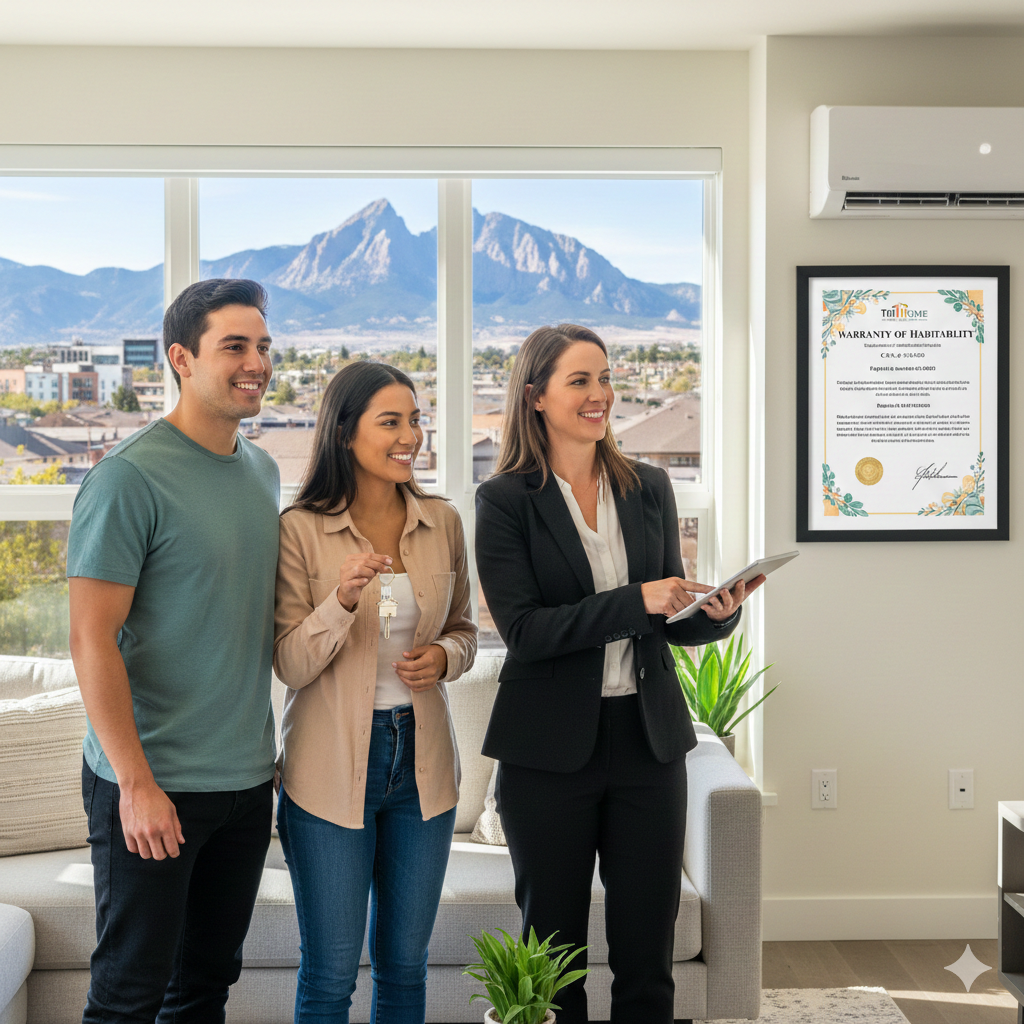
Elevating the Standard: Why Colorado’s Habitability Laws are the Foundation of Your Investment Success
For property owners in Littleton, Highlands Ranch, and Lone Tree, the landscape of residential landlording has fundamentally shifted. As of 2026, Colorado has implemented some of the most robust tenant protections in the country. While these regulations may seem like a significant change for some, at Tri Home, these standards are nothing new. We have always followed—and exceeded—these benchmarks because we believe a safe, high-quality home is the only way to do business. However, what was once "best practice" is now the letter of the law.
Savvy investors understand a fundamental truth: Our residents are our most valuable assets. A safe, well-maintained home doesn't just fulfill a legal checkbox; it secures your long-term returns by fostering tenant retention, reducing turnover costs, and protecting the physical value of your real estate.
Understanding the "Warranty of Habitability"
At the heart of Colorado rental law is the Implied Warranty of Habitability. This legal doctrine essentially states that by the very act of offering a property for rent, a landlord warrants that the premises are fit for human habitation. This is governed primarily by Colorado Revised Statute § 38-12-503.
The law is clear and mandatory:
C.R.S. § 38-12-503 (1): "In every rental agreement, the landlord is deemed to warrant that the residential premises is fit for human habitation at the inception of the tenant's occupancy and that the landlord will maintain the residential premises as fit for human habitation throughout the entire period that the tenant lawfully occupies..."
What Makes a Property "Uninhabitable"?
According to C.R.S. § 38-12-505, a property is considered uninhabitable if it substantially lacks essential services or if it is in a condition that is materially dangerous to a tenant’s life, health, or safety. Essential standards include:
Weather Protection: Waterproofing of roof and exterior walls, including unbroken windows and doors.
Plumbing & Gas: Facilities maintained in good working order and conforming to applicable law at the time of installation.
Water Access: Running water and reasonable amounts of hot water connected to an approved sewage system.
Heating & Cooling: Functioning heating and, under new 2024/2025 updates, cooling standards that comply with health codes.
Electrical: Lighting and wiring maintained in good working order.
Health & Hygiene: Common areas kept clean and free from debris, filth, or infestations (rodents/vermin).
Recent Legislation: The New Legal Reality
The Colorado General Assembly has been incredibly active over the last two years, passing legislation that removes any ambiguity regarding landlord responsibilities.
Senate Bill 24-094: Safe Housing for Residential Tenants
This landmark bill, which went into full effect recently, clarifies that a breach of the warranty occurs if a landlord fails to respond to a habitability notice within specific, narrow timeframes:
24 Hours: For conditions that materially interfere with a tenant’s life, health, or safety (e.g., no heat in winter or a gas leak).
72 Hours: For other uninhabitable conditions (e.g., a broken appliance included in the lease).
Furthermore, if a property becomes uninhabitable due to a major failure, landlords are now required to provide comparable temporary housing or a hotel room at no cost to the tenant until the issue is resolved.
House Bill 23-1095 & 2025 Updates
These laws prevent landlords from including "waivers" in leases that would attempt to bypass these standards. You cannot ask a tenant to "accept the property as-is" if that state violates habitability laws. Additionally, as of January 1, 2025, all residential leases must include a mandatory disclosure in both English and Spanish informing tenants of these rights.
Why Best Practice Matters in Littleton, Colorado
In the competitive rental markets of Littleton, Colorado, and surrounding areas like Highlands Ranch, "meeting the minimum" is a risky strategy. High-quality residents—those who pay on time and treat your property with respect—have choices.
At Tri Home, we have historically maintained these standards as a matter of principle, but now that they are codified into law, the stakes for non-compliance are higher than ever.
The ROI of Proactive Maintenance:
Reduced Turnover: In Littleton, the average "turn" cost (cleaning, painting, marketing, and vacancy time) can easily exceed $3,000. Keeping a tenant happy by exceeding habitability standards is far more cost-effective than finding a new one.
Liability Mitigation: Adhering strictly to C.R.S. § 38-12-503 protects you from costly litigation and "treble damages" (three times the amount of a security deposit or rent) that courts can award for bad-faith violations.
Asset Protection: Regular upgrades to HVAC, plumbing, and insulation—which often exceed basic habitability—protect the "bones" of your investment.
Conclusion
The message from the state is clear: tenant safety is non-negotiable. For property owners in the south Denver metro area, the best path to profitability is through a partnership with your residents. By providing a home that isn't just "legal" but truly exceptional, you ensure your investment thrives. At Tri Home, we are proud to continue leading the way in professional, law-abiding property management.